
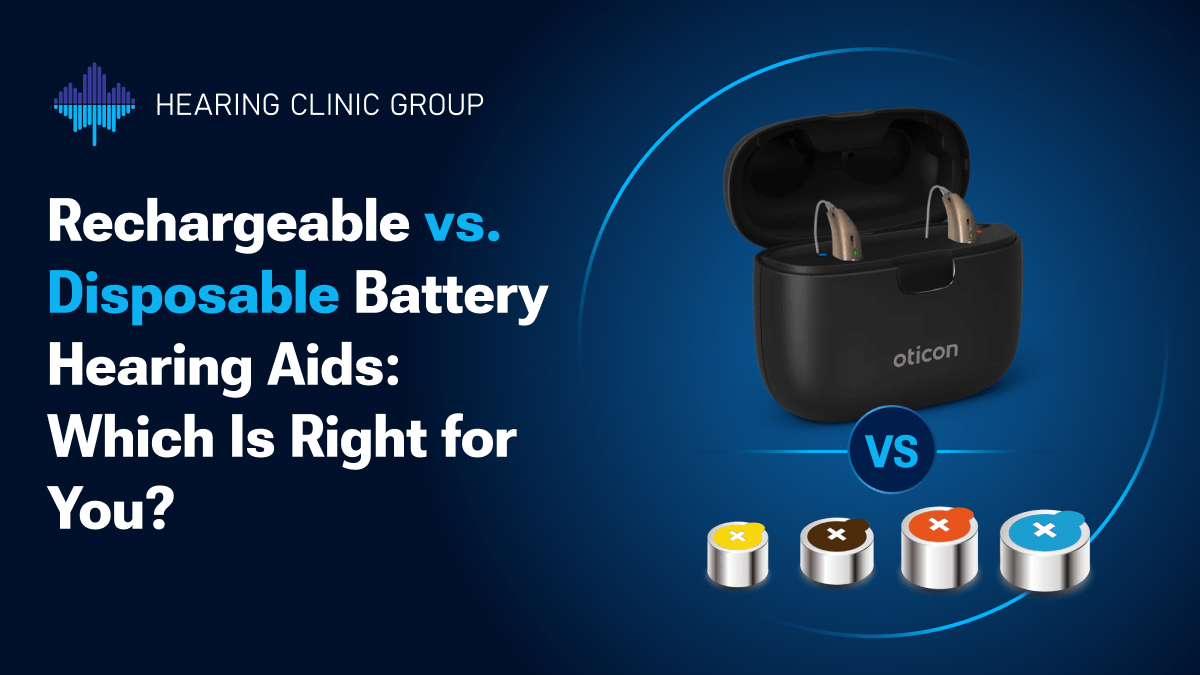
Choosing a hearing aid involves more than picking a style or technology level. It also means deciding how the device will be powered, which can affect comfort, cost, and daily routine.
Most hearing aids are powered one of two ways: with a built-in rechargeable battery, or with a replaceable disposable battery. Both are widely used and both work well, but each comes with its own trade-offs.
What Is the Difference?
Rechargeable hearing aids have a battery built in and are charged in a charging case overnight, similar to wireless earbuds. Disposable battery hearing aids use small replaceable zinc-air batteries, which are swapped out every few days to a couple of weeks depending on use.
Neither option is universally better. The right choice depends on your routine, comfort with technology, and personal preferences.
The Pros and Cons of Rechargeable Hearing Aids
1. Simple Daily Routine
Instead of carrying spare batteries or handling small battery doors, you simply place your hearing aids in a charging case each night and wake up to a full charge. This can be especially helpful if you have limited dexterity or prefer a predictable routine.
2. Higher Upfront Cost
The built-in battery and charging case add to the overall price, so rechargeable models typically cost more upfront than disposable battery models.
3. Limited Battery Lifespan
Rechargeable batteries are designed to last roughly three to five years before their capacity noticeably declines. Since the battery is built in, replacing it usually means sending the hearing aid to the manufacturer or a hearing care professional rather than swapping it out at home.
The Pros and Cons of Disposable Battery Hearing Aids
1. Batteries Must Be Carried at All Times
You’ll need to keep spare batteries on hand consistently, remembering to pack extras when leaving the house or traveling so the hearing aids don’t stop working unexpectedly.
2. Lower Upfront Cost
With no built-in charging technology, disposable battery hearing aids generally have a lower initial purchase price.
3. Turning the Hearing Aid Off When Not in Use
It’s good practice to open the battery door or turn the device off when not in use, such as overnight, to conserve battery life—an extra small step in the daily routine.
4. Ongoing Battery Costs
Batteries are typically replaced every few days to a couple of weeks, and these recurring purchases add up over time, so it’s worth factoring into the long-term cost.
5. No Charger Required for Travel
With no charging case or outlet to worry about, disposable battery hearing aids can be especially convenient for travel, camping, or places where charging isn’t easily accessible.
Which Option Is Right for You?
Rechargeable hearing aids may be a good fit if you:
- Prefer a simple, predictable daily routine
- Have difficulty handling small batteries
- Are comfortable with a higher upfront cost for added convenience
- Have reliable access to power for nightly charging
Disposable battery hearing aids may be a better fit if you:
- Prefer a lower upfront cost
- Don’t want to rely on a charger or charging case
- Are comfortable carrying and replacing small batteries
- Travel often to places where charging may be inconvenient
Questions to Ask Before Choosing
- How long does a full charge typically last with regular use?
- What’s involved in replacing a rechargeable battery once it wears out?
- What size battery does this hearing aid use, and how often will it need replacing?
- What’s the cost difference between the two options, upfront and over time?
- Which option best fits my daily routine and lifestyle?
Get Support Choosing the Right Hearing Aid
Both rechargeable and disposable battery hearing aids can work well—the right choice often comes down to routine, budget, and lifestyle rather than one option being better than the other.
At Hearing Clinic Group, our hearing care professionals can walk you through both options and help you choose a hearing aid that fits your needs. Contact Hearing Clinic Group to book an appointment.
Etobicoke
Kingsway Hearing Clinic
2425 Bloor St. W.
Unit 201, Toronto, ON M6S 4W4
Phone: 416-237-0800
Fax: 416-237-0904
kingswayhearingclinic@gmail.com
Hamilton
Hamilton Hearing Clinic
920 Upper Wentworth Street, Unit 3
Hamilton, ON L9A 5C5
Phone: 905-385-8383
Fax: 905-385-8385
hamiltonhearingclinic@gmail.com
Markham
Maple Hearing Clinic
3255 HWY 7 East, Unit 183,
Markham, ON L3R 3P9
Phone: 905-604-8030
Fax: 905-604-8070
maplehearingclinic@gmail.com
Oakville and Burlington
Hopedale Hearing Clinic
1515 Rebecca Street, Unit 38
Oakville, ON L6L 5G8
Phone: 905-827-7333
Fax: 905-827-5550
hopedalehearingclinic@gmail.com
Scarborough
Scarborough Hearing Clinic
4190 Finch Avenue, Unit 318
Scarborough, ON M1S 4T7
Phone: 416-321-9020
Fax: 416-321-9022
scarboroughhearingclinic@gmail.com
St. Catharines
St. Catharines Hearing Clinic
343 Glendale Avenue, Unit 100
St. Catharines, ON L2T 0A1
Phone: 905-227-7204
Fax: 905-227-7206
stcatharineshearingclinic@gmail.com
Related Resources
- Hearing Aids (Hearing Clinic Group): https://hearingclinicgroup.com/our-services/hearing-aids/
- How Hearing Aids Enhance Your Hearing (Hearing Clinic Group): https://hearingclinicgroup.com/learn-about-hearing-loss/how-hearing-aids-enhances-your-hearing/
- Problems with Your Hearing Aid?: https://hearingclinicgroup.com/problems-with-your-hearing-aid/